
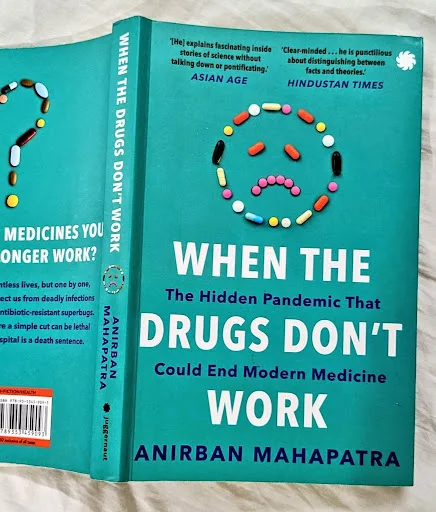
When The Drugs Don't Work by Anirban Mahapatra

 "The age of antibiotics is ending. If we don’t act now, we will soon find ourselves in a world where minor injuries and common infections are deadly once more."

📚 Just finished reading "When The Drugs Don't Work" by Anirban Mahapatra, and it was an eye-opener! Reminded me of another great book Bottle of Lies. Different context, similar recupersesion.

Have you ever wondered what would happen if antibiotics stopped working? 🤔💊

The book is a sobering exploration of the crisis of antibiotic resistance. It takes readers through the history of antibiotics, their revolutionary impact on medicine, and the alarming rise of antibiotic-resistant superbugs. 

Mahapatra's narrative sheds light on a future where common infections could once again become deadly. This is a read for anyone concerned about the future of healthcare and the steps we must take to prevent a global health catastrophe. 
ANIRBAN MAHAPATRA is the author of the book, COVID-19: Separating Fact from Fiction, and writes a popular science column for the Hindustan Times.

Non-fiction/Health
Price - Rs 599
Publisher - 
Juggernaut Books 

Comments

Also read

Punjab’s stilt-plus-four real estate rule 2025: Game changer or urban chaos? | circle rate hike explained

When the Punjab Cabinet approved the Unified Building Rules 2025, allowing stilt-plus-four floor construction across 40-ft-wide roads, it sparked both celebration and anxiety. For homeowners, it opened a new chapter of vertical prosperity. For urban planners, it may have unlocked Pandora’s box. Add to that a steep rise in circle rates up to 67% in Mohali and you have the perfect cocktail for a cityscape revolution. Is Punjab’s stilt-plus-four policy a game changer or a warning sign for urban chaos? Punjab’s 2025 building rule reforms are rewriting its urban DNA. With stilt-plus-four floors now permitted on 250 sq yd plots and higher circle rates in force, Punjab’s real estate market is at a crossroads. Is this the dawn of new opportunities or the slow death of livable cities? The answer lies somewhere between ambition and chaos. Urban transformation often begins with good intentions and ends in gridlocks. Punjab’s new stilt-plus-four policy and simultaneous circle rate hike hav...

Cutting people off isn’t strength—It is a trauma response

Your ability to cut people off and self-isolate is not a skill you should be proud of—It is a trauma response Cutting people off and self-isolating may feel like a protective shield, but it is often rooted in unresolved or unhealed trauma and an inability to depend on others. While these behaviors seem like self-preservation, they end up reinforcing isolation and blocking meaningful connections. Confronting these patterns, seeking therapy, and nurturing supportive relationships can help break this unhealthy cycle. Plus, a simple act like planting a jasmine plant can symbolise the start of your journey towards emotional healing. Why do we cut people off and isolate? If you’re someone who prides themselves on “cutting people off” or keeping a tight circle, you might believe it’s a skill—a way to protect yourself from betrayal, hurt, or unnecessary drama. I get it. I’ve been there, too. But here’s the thing: this ability to isolate yourself is not as empowering as it may seem. In fact, i...

What is karmic debt? How to clear it for a successful life

Ever felt like you're stuck in a loop, facing the same challenges over and over? You might be dealing with karmic debt—a spiritual IOU from past actions. Understanding and clearing this debt can pave the way for a more successful and fulfilling life. ​​ What is karma and how does it influence our lives? Karma, a concept rooted in ancient spiritual traditions, operates on the principle of cause and effect. Essentially, it suggests that our actions, thoughts, and intentions create energy that returns to us in kind. This universal law implies that positive deeds lead to favourable outcomes, while negative actions result in undesirable consequences. ​ In my own life, I have observed how acts of kindness often lead to unexpected blessings. Conversely, moments of negativity seem to attract further challenges. This personal experience underscores the idea that our current circumstances are shaped by past behaviours, and our present choices lay the foundation for future experiences...